
How to Reduce Monthly Bills: Smart Strategies for 2026
Learn how to reduce monthly bills with smart strategies, negotiation scripts, budgets, automation, & 2026 LLM/AI cost-saving tips.
The bill arrives, and the number is higher again. Electricity climbed, internet got nudged upward, a subscription you forgot about automatically renewed, and the credit card minimum is still sitting there like it never heard the word “budget.” When that happens, how to reduce monthly bills stops being a theoretical question and becomes a monthly survival skill.
The most useful mindset is simple, recurring bills aren't small just because each one feels manageable. They compound into a budget leak, and inflation plus provider price changes can make that leak harder to plug than a one-time splurge. That's why the smartest savings usually come from reviewing what repeats, not from trying to live like a monk for a week. For a practical example of a structured expense review, this SpendLens AI sample report shows how recurring spend can be broken into visible line items.
Table of Contents
- Understanding the Hidden Opportunities in Recurring Bills
- Assess Your Current Spending and Prioritize Cuts
- Slash Utility and Telecom Expenses With Practical Tactics
- Optimize Subscriptions Insurance and Debt Payments
- Automate Savings with Checklists and Scripts
- Apply Strategies to LLM and AI Monthly Spend
- Sustaining Your Savings Momentum
Understanding the Hidden Opportunities in Recurring Bills
The biggest mistake people make is focusing on the obvious bill and ignoring the rest. Rent or mortgage gets all the attention, then the smaller charges accumulate, subscriptions, utility waste, telecom plans, insurance premiums, and debt payments that never seem to shrink on their own. When provider pricing moves faster than household behavior can adjust, volatility becomes the core problem, not just overspending, which is why bill reduction under inflation needs a sharper approach than generic coupon hunting.
Why recurring charges deserve first attention
Recurring bills are useful because they tell the truth about your budget habits. A one-time purchase may sting, but a monthly charge can keep draining cash long after the initial decision is forgotten. The practical win is that small savings can repeat every billing cycle, which means a modest cut can matter more over time than a dramatic but one-off expense freeze.
A better framework is to look at recurring bills as active choices, not fixed fate. If a subscription isn't used, if the thermostat is set carelessly, or if a service provider has raised rates while competitors offer similar service, those are all places where action can happen now. That's the mindset shift that makes how to reduce monthly bills feel manageable instead of overwhelming.
Practical rule: Don't start with guilt, start with visibility. Once every recurring charge is visible, the easiest cuts usually reveal themselves.
Assess Your Current Spending and Prioritize Cuts
The first job is to get your numbers out of memory and into a list. Pull at least three months of bank and card statements, then write down every repeating charge, including subscriptions, utilities, insurance, phone, internet, and debt payments. Monthly averages over several months are usually more reliable than guesswork for variable expenses, especially when utility and usage-based charges bounce around.
Use the 50/30/20 rule as your benchmark
A widely used budgeting rule is the 50/30/20 framework, which allocates 50% of after-tax income to necessities, 30% to wants, and 20% to savings or debt repayment, according to InCharge's budgeting guidance. If necessities are eating more than half of take-home pay, that's a signal to look hardest at recurring waste, not at the rare treat or the occasional night out.
The biggest savings usually come from the top three non-housing, non-transportation categories. That's where the money tends to be large enough to matter and flexible enough to change. A phone plan can be renegotiated, a streaming bundle can be trimmed, and a utility bill can often be lowered with behavior changes that don't touch day-to-day comfort very much.
| Sample Budget Breakdown Using 50/30/20 Rule | Percentage of Income | Example Monthly Cost |
|---|---|---|
| Necessities | 50% | Varies by household |
| Wants | 30% | Varies by household |
| Savings or Debt Repayment | 20% | Varies by household |
Use a budgeting app or spreadsheet to sort each recurring charge into one of those buckets. For a quick way to pressure-test categories and estimate where cuts may land, the SpendLens AI calculator can help you map recurring spend into visible groups.
If you can't explain a charge in one sentence, it usually deserves a closer look.
Slash Utility and Telecom Expenses With Practical Tactics
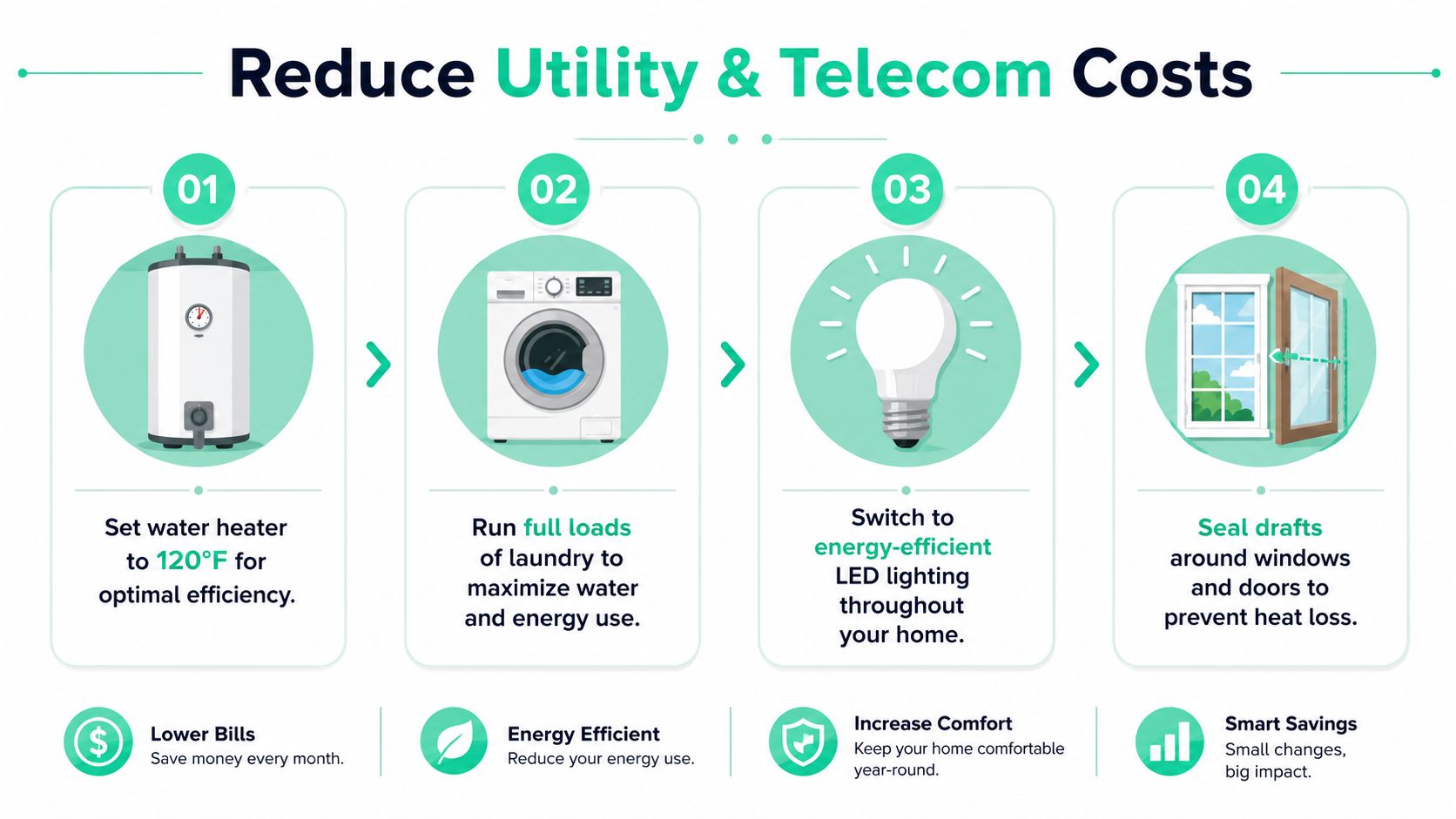
Utilities stay stubborn because they feel fixed, but a lot of the monthly bill is still under your control. The U.S. Department of Energy's EnergySavers guidance points to practical moves that do not require a lifestyle overhaul, including setting water heaters to 120°F, taking short showers, running laundry and dishwashers only with full loads, switching to LED lighting, sealing leaks around windows and doors, and using programmable thermostats to cut waste. These are the kinds of changes that trim recurring costs without making the home feel colder, dimmer, or harder to live in.
The image below shows the core utility-saving sequence in a simple process flow.
What to change first at home
Start with the habits and upgrades that pay off quickly. A water heater set too high wastes energy every day, and heating or cooling has to work harder when leaks around windows and doors are left open. LED bulbs and programmable thermostats are plain, practical upgrades, but they reduce recurring costs without asking you to give up comfort.
Comfort is worth preserving. Waste is not.
Full laundry loads and smarter thermostat settings are the easiest places to begin because they fit into an existing routine. That same logic applies in personal finance and in AI spending. If a cloud or LLM workflow is using more compute than the task needs, the fix is usually the same kind of discipline, smaller defaults, tighter settings, and fewer unnecessary cycles. In both cases, the goal is to lower the monthly burn rate without damaging the result.
How to negotiate telecom without wasting time
Phone and internet bills respond best to preparation. Before you call, have your current bill, contract, payment history, and a competitor's offer in front of you, then ask for retention or a better rate. A stronger position comes from showing that you know what you are paying now and what a rival is offering, which gives the provider a reason to keep you.
A simple call script works better than improvising. Say the current rate is too high, mention the competing promotion you are willing to switch to, and ask whether there is a lower plan, a retention offer, or a temporary adjustment. The trade-off matters, savings can disappear when promotions end, so set a reminder before the discount expires and get the new price in writing.
Ask for the rate, the term, and the expiration date in the same conversation. If one of those is missing, the deal is weaker than it looks.
Optimize Subscriptions Insurance and Debt Payments
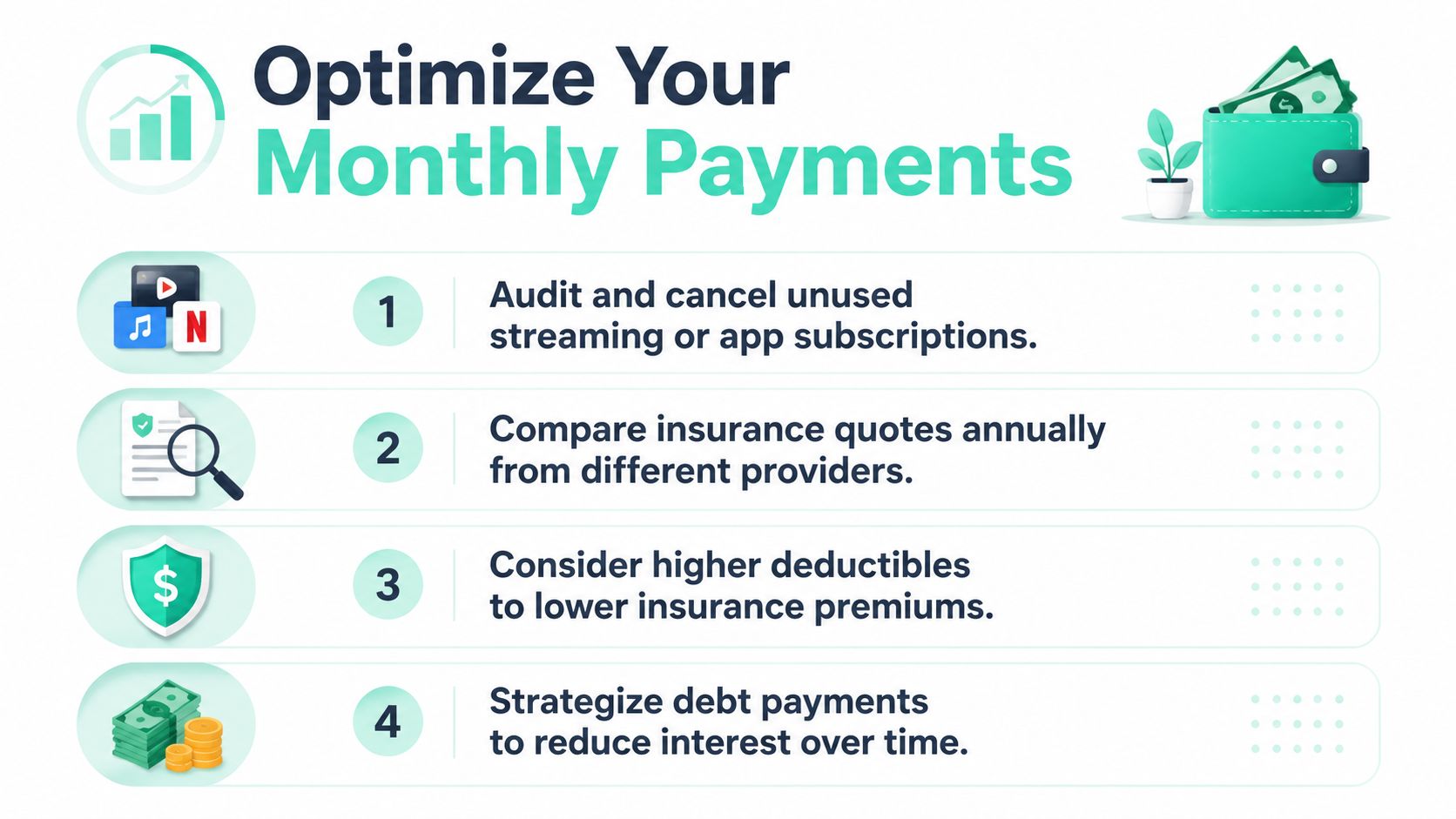
Recurring charges are where budgets erode. Streaming services, app subscriptions, insurance premiums, and interest charges can sit on autopilot for months because they never feel as urgent as rent or groceries. That makes them good targets, they repeat every month, they can be changed, and they usually offer room to trim without changing your day-to-day life.
Audit what you keep and what you actually use
Open every recurring service and ask one blunt question, would you pay for this again today? If the answer is no, cancel it. If the answer is maybe, check the last time you used it, then decide whether it still earns a place in your budget or just survives on habit.
Insurance deserves a separate review. Price shopping matters, but the policy terms matter just as much, especially if a higher deductible lowers the premium. The trade-off is real, a lower monthly bill can leave you with more out-of-pocket risk later, so the right choice depends on how much emergency cash you keep on hand. Debt belongs in this same review, because a high interest rate is just another recurring cost. A lower rate or a better repayment order can free up cash next month without changing your standard of living.
For service and software subscriptions, a quick audit often pays for itself fast. A few cancelled plans can save enough to cover a utility bill, and for teams tracking cloud spend, that same discipline can stop small recurring charges from turning into wasted monthly burn. If you want a place to compare what you're paying against a tool that tracks recurring costs, SpendLens AI pricing is a practical starting point.
Negotiate from the strongest position you have
The simplest tactic still works: call with evidence. Compare current terms, gather competing offers, and ask for a better rate on the spot. That keeps the conversation specific and gives the provider a reason to respond instead of giving you a canned answer.
Use a short sequence so the call stays focused:
- Cancel first: Remove anything you no longer use before you ask for a concession.
- Compare next: Collect competing quotes or offers before you call.
- Negotiate last: Ask for the lower rate, a retention offer, or a revised payment plan.
This applies to subscriptions, insurance, and debt payments alike. A lower premium helps only if the deductible still fits your cash cushion. A debt payment plan helps only if it cuts interest without stretching the balance out so far that you pay more over time. Savings from any one line item may look small on its own, but together they can change what the month feels like.
Automate Savings with Checklists and Scripts
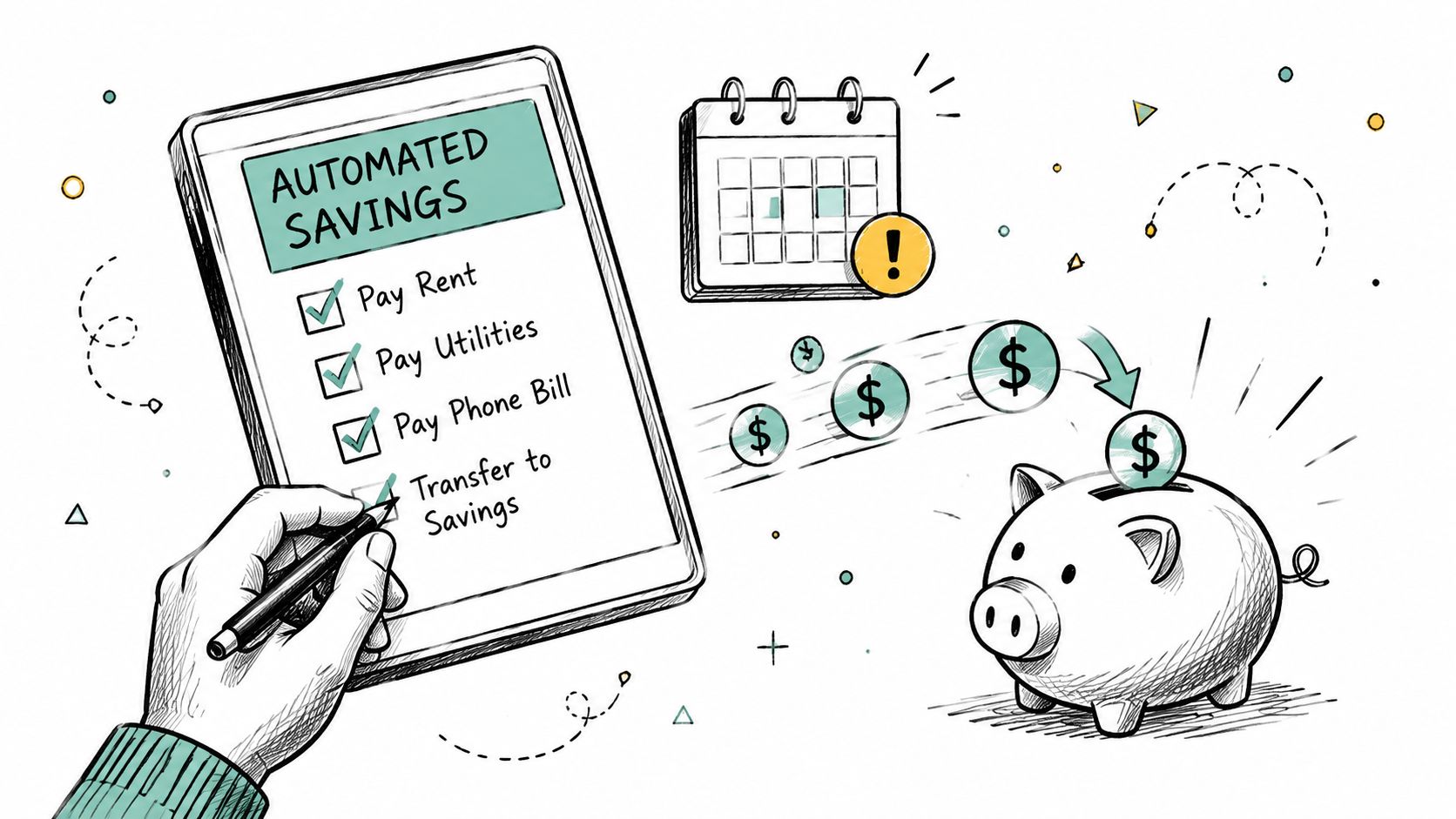
Manual effort gets you started, but automation keeps savings alive. A discount is useless if it expires unnoticed, and a negotiated rate doesn't help if the provider resets it without notice later. The point of automation is to make bill reduction routine, not dependent on memory.
Build a simple monthly control system
Set calendar reminders for renewal dates, promo expirations, and insurance review windows. Put autopay on bills that are stable and predictable, then keep alerts turned on so you still see price changes, declined payments, or rate jumps. If your inbox is crowded, use filters to flag renewal notices and billing changes so they don't get buried under normal mail.
A short checklist keeps the process repeatable:
- Review statements monthly: Scan for unused charges, price hikes, and duplicate services.
- Track renewal dates: Put them in Google Calendar or your budgeting app.
- Save negotiation notes: Record the rate you were offered and when it expires.
- Follow up before deadlines: Contact providers before promo windows close.
The time saved is real, because once the system is set up, you're not re-learning the process every month. You're just checking a dashboard and acting on the few bills that moved.
For a practical pricing reference tied to recurring-cost management, the SpendLens AI pricing page shows how a subscription model can be evaluated as part of a broader spend review.
Keep your scripts short and specific
A useful script sounds like this, “My current bill is higher than comparable offers I'm seeing. I'd like to review retention options or a lower rate before I decide whether to stay.” That phrasing is direct, polite, and hard to dodge. It also avoids the biggest mistake people make, asking for a discount without saying what they want.
If a provider says no, don't argue. Ask when to call back, whether a new promotion is expected, and what would qualify you for a lower tier. The objective isn't to win a debate, it's to lower the bill with the least friction.
Apply Strategies to LLM and AI Monthly Spend
AI usage behaves a lot like any other recurring bill, except the line items are tokens, model tiers, cached prompts, and repeated context. The same discipline that works for household bills works here too. Measure what recurs, find the controllable drivers, and cut waste before it compounds. For teams building with LLMs, that means treating AI spend as a budget category instead of an invisible side effect. It also means carrying the same bill-cutting mindset from utilities and subscriptions into developer tooling, where one bad default can quietly add hundreds of extra calls and hours of wasted prompt work.
Measure the work before you optimize it
Start by instrumenting token usage by workload, not just by invoice total. Expert optimization guidance recommends tracking input, output, and cached tokens separately, then using prompt caching, routing easy requests to cheaper models, pruning conversation history, and batching non-urgent jobs. One published workflow also recommends a prompt-cache hit rate of at least 20% for material savings. A separate APICost optimization guide explains that caching system prompts and documents can cut input-token cost by 40–90% when the same context is reused.
A practical setup looks like this in pseudocode:
# Conceptual example, not a full implementation
client.tag(feature="support_draft", workload="summarization")
response = client.chat(
    model="cheaper-model-for-simple-tasks",
    prompt=prompt,
    max_tokens=120
)
That pattern works because it exposes where the cost comes from. Once you can see which task type is expensive, you can route routine jobs to smaller models and reserve premium models for cases that need them. The savings show up fast when repetitive summaries, extraction tasks, or internal drafts stop going through the most expensive path.
Cap output and stop paying for prose you do not need
One production guide says a natural-language answer wrapped in prose can cost 2–3× as many output tokens as an equivalent JSON response, and it recommends capping output with max_tokens. The same source gives a concrete example, for a 2-sentence summary, set max_tokens=120 instead of 4096, which keeps runaway generations from bloating the bill. That is the same logic as using full laundry loads, you control the waste at the source.
If you want a platform option that adds lightweight instrumentation to existing Python code, SpendLens AI can tag calls by workflow and surface spend drivers, cache efficiency, and model-switch opportunities. The useful part is visibility. Once teams know which feature is burning tokens, they can cut spend without guessing, and they can do it without slowing down the parts of the product that need higher-end models.
Use the same bill-cutting mindset across consumer and AI costs
Household bills and API bills both reward the same habits. Put recurring charges on a list, identify the top drivers, reroute where possible, and set alerts before costs drift too far. AI teams that do this well usually stop paying premium-model prices for routine summaries, repeated prompts, and other jobs that do not need that level of horsepower.
The result is lower spend and cleaner decision-making. When the bill is broken into parts, each part can be improved.
Sustaining Your Savings Momentum
One clean sweep won't hold forever. Bills change, contracts expire, seasons shift usage, and providers test how subtly they can raise prices. The people who keep saving are the ones who build a lightweight review habit, not the ones who rely on one dramatic round of cuts.
Schedule quarterly bill reviews, then compare what you're paying now with what you paid last quarter. Keep a simple dashboard in your budgeting app, set reminders before renewals, and revisit provider offers before discounts lapse. Over time, those small checks protect the gains you already made and keep the next round of savings easy to spot.